Case study
Little Freddie
Business: Organic baby food company
Work: Website strategy, design and build
Build: Webflow + Shopify
View website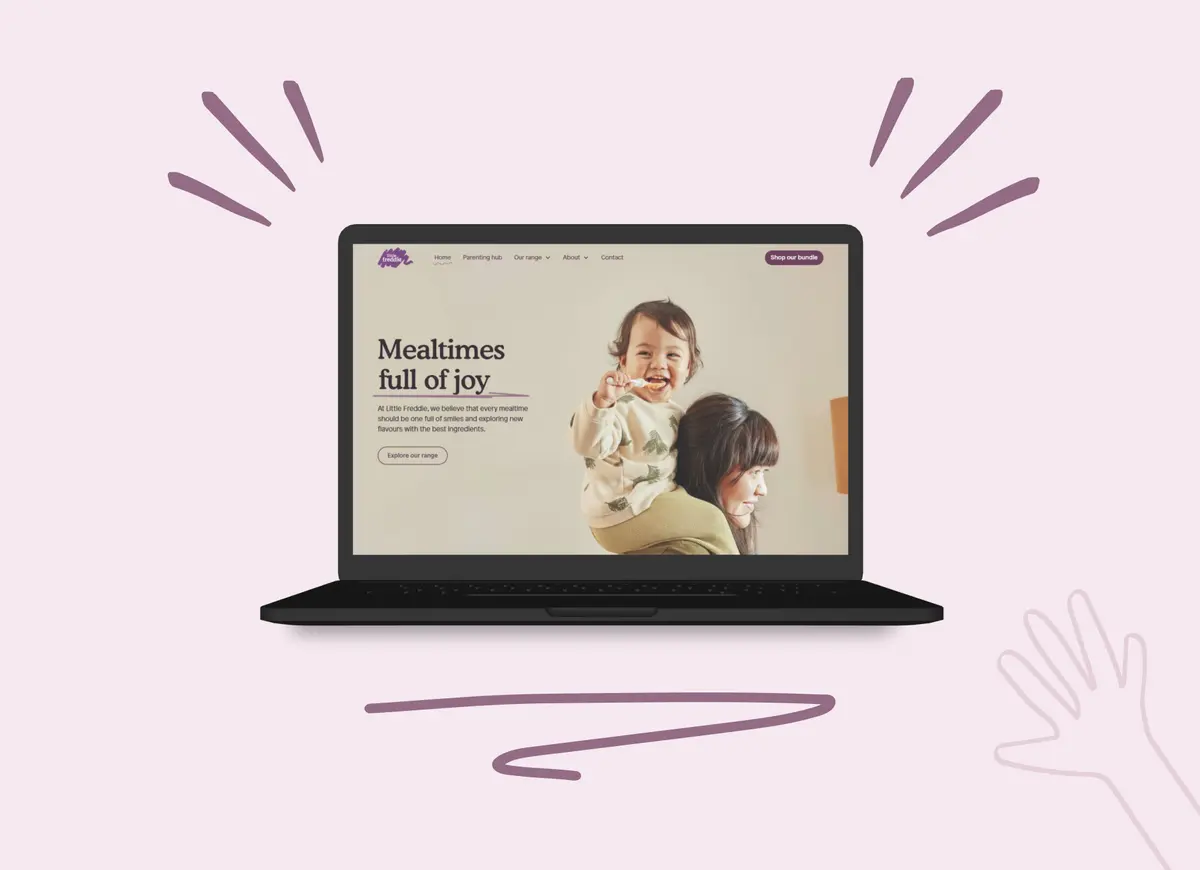
Little Freddie had outgrown their Shopify website. The site was packed with information — but none of it was easy to find. Navigation was bloated, the homepage lacked a clear value proposition, and the layout felt cluttered with too many blocks competing for attention.
Behind the scenes, things weren't much better. Page loading speeds were poor, there were 21 accessibility errors on the homepage alone, and the site's carbon footprint had earned it an F rating on Website Carbon Calculator — releasing 1.02g of CO₂ per page view. SEO was under-optimised, product pages weren't clickable from the homepage, and Google Analytics was active but barely being used to inform decisions.
For a brand that prides itself on doing right by parents and the planet, the website wasn't reflecting that mission.
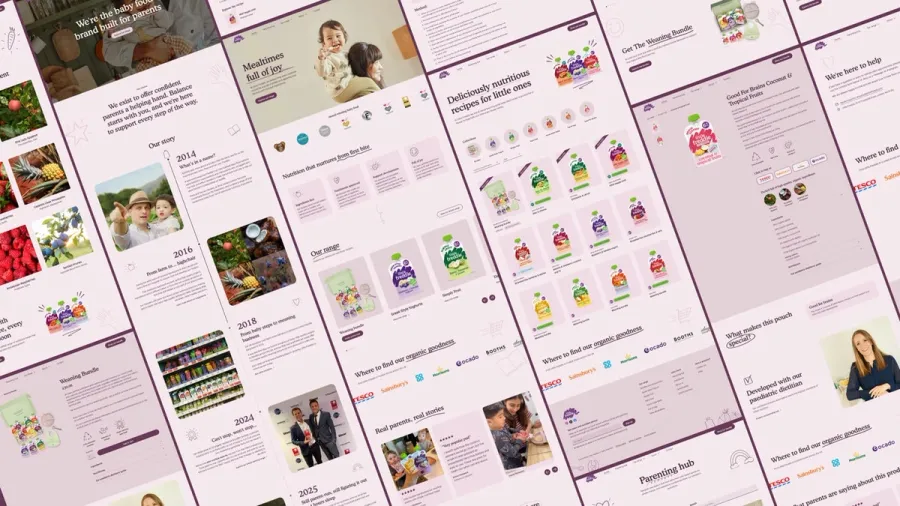
We carried out a full visual refresh and rebuild — moving the marketing site from Shopify to Webflow, with a lightweight Shopify subdomain kept purely for direct-to-consumer bundle sales.
The project kicked off with a detailed website audit and strategy phase. We mapped out every issue, from navigation and content hierarchy to SEO gaps and performance bottlenecks, then built a clear plan of action.
From there, the work included:
The numbers speak for themselves:
After launch, Little Freddie joined a Growth and Support plan — a monthly retainer covering ongoing web design, development, SEO monitoring, analytics reviews, performance checks and content optimisation. Each month includes a detailed report breaking down what's changed, what's working and where to focus next.
Little Freddie is left with a website that doesn't just look the part. It works harder, loads faster, ranks higher and leaves a lighter footprint. Exactly what a brand like Little Freddie deserves.
Lucian handled a full Webflow rebuild and Shopify integration without losing the SEO ground we'd built up, our biggest worry going in. Search rankings improved after launch, impressions are up from 55k to 85k a month. What's made the biggest difference is the ongoing support: issues caught and fixed fast, nothing left to chance, thanks to Lucian's incredible processes and organisation.

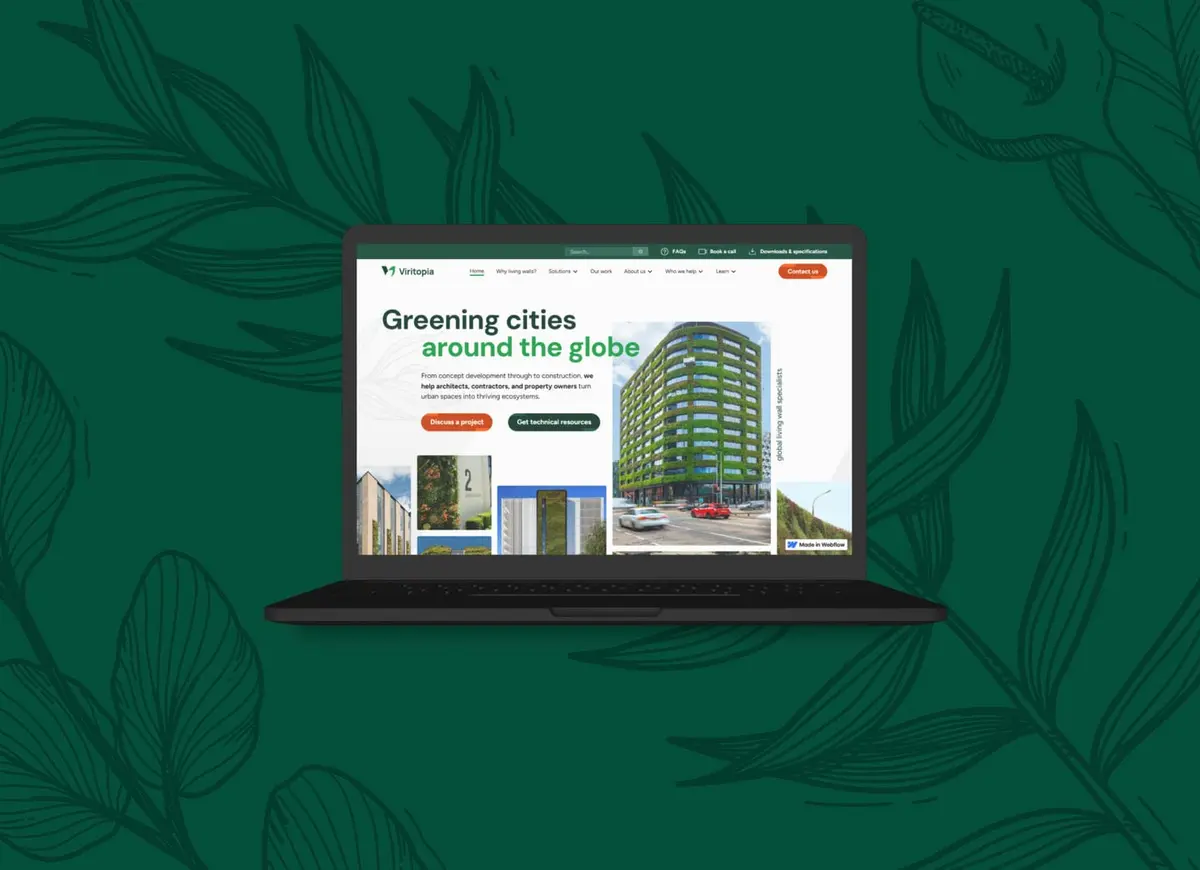
A strategic, low-carbon website revamp for the green-infrastructure leaders. The redesign yielded a 3x higher conversion rate, 2x higher Google Search position and 86% lower homepage carbon footprint.
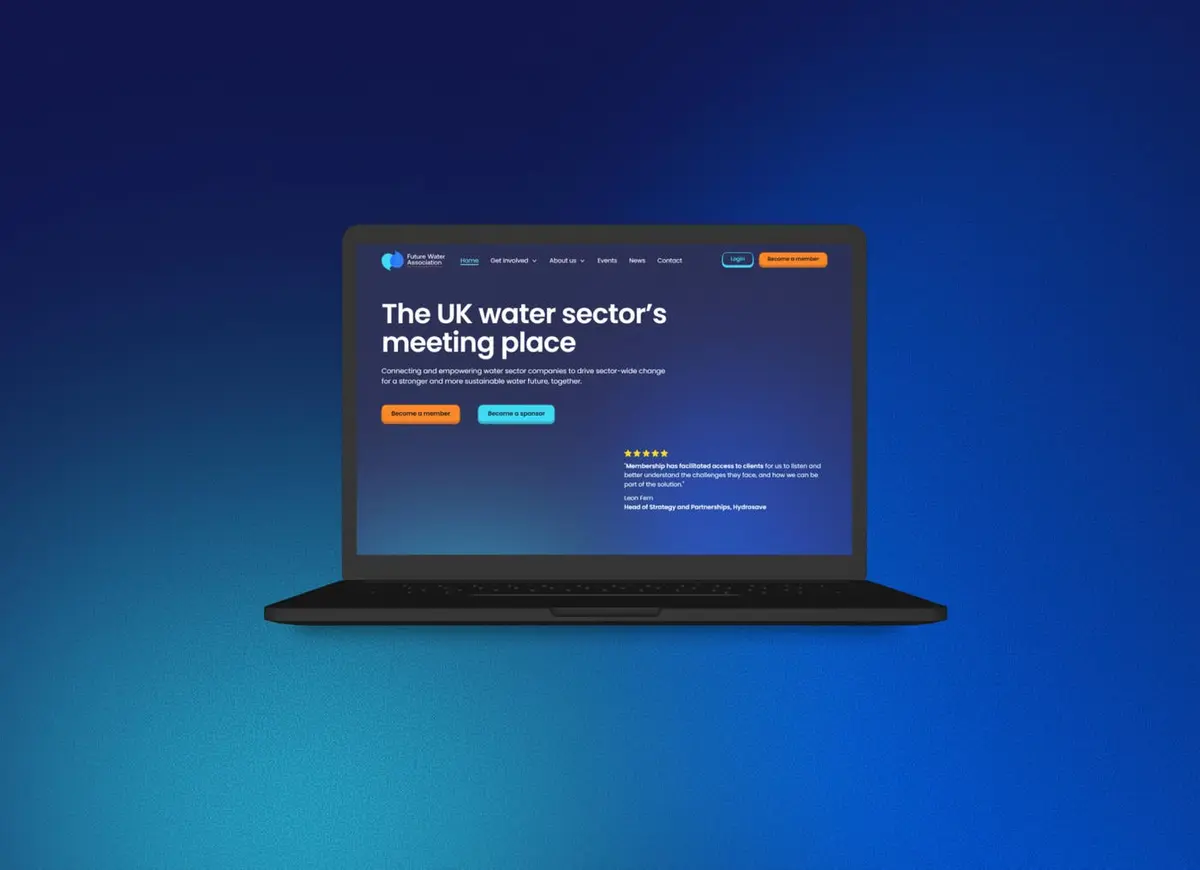
A low-carbon website redesign that modernised FWA’s digital presence. Better user experience, a gated members’ area, massively improved accessibility scores, and a 79% lower carbon footprint.